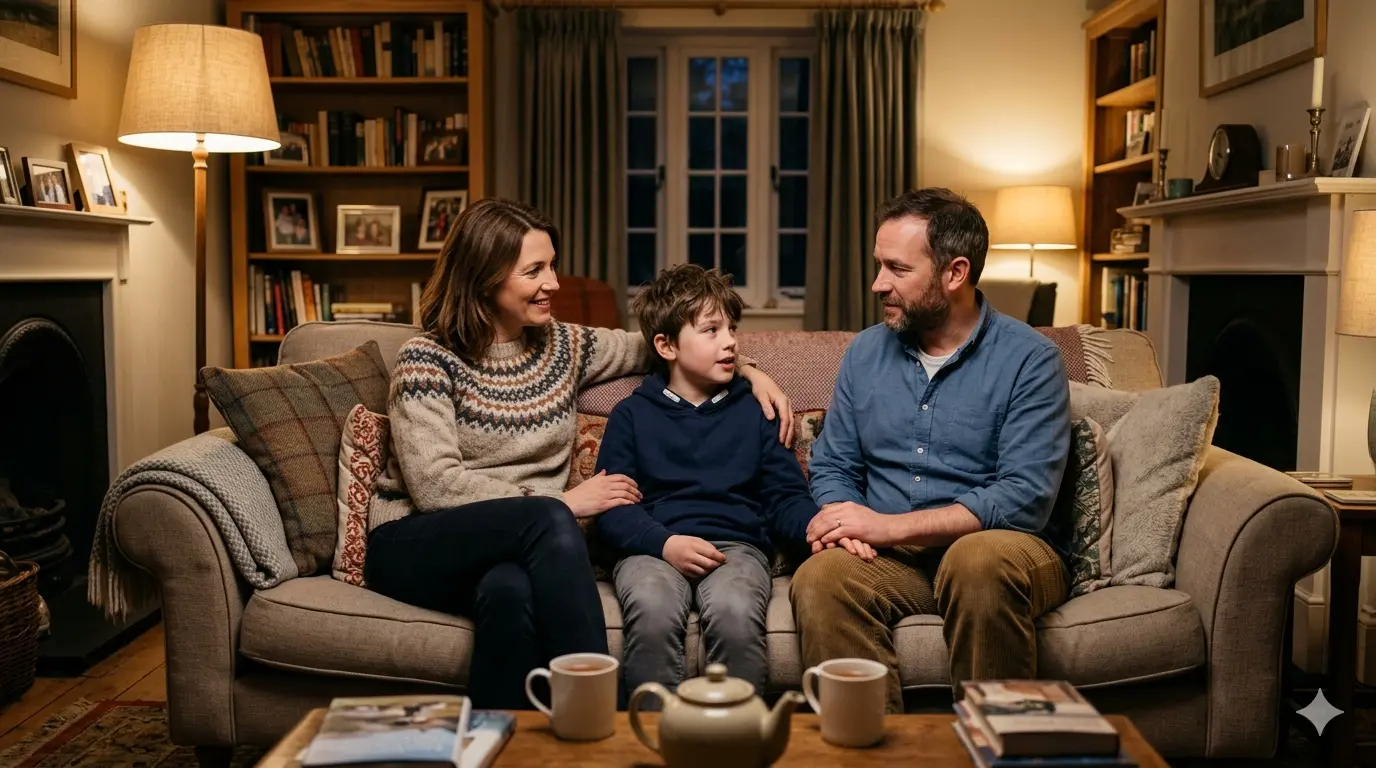

Let's be honest about something that rarely gets discussed in 11+ guides: you're probably more anxious about this exam than your child is. That knot in your stomach when you think about results day, the worry that keeps you awake wondering if you're doing enough, the pressure you feel from other parents' apparent confidence – it's all completely normal. And more importantly, it's something we can work with, not against.
The Hidden Truth About Parental Anxiety
Your anxiety about the 11+ isn't a character flaw or a sign of weakness. It's love. It's the fierce desire to give your child every opportunity, mixed with the fear of letting them down. It's the weight of making decisions that feel monumentally important, combined with the uncertainty of not knowing if you're getting it right.
But here's what we need to talk about: your child is watching you. Not in a pressure-filled way, but in the way children always watch their parents – absorbing your emotions, mirroring your reactions, and taking their cues from your response to challenges. When you're anxious, they feel it. When you're calm, they borrow that calm. Your emotional state becomes the invisible curriculum they're learning from every single day.
Understanding the Anxiety Transfer
Children are remarkably intuitive emotional barometers. They pick up on:
- The slight tension in your voice when you ask about homework
- The way you hover a bit too long when they're doing practice papers
- The forced cheerfulness that doesn't quite reach your eyes
- The comparison conversations with other parents they overhear
- The sigh when they get a question wrong
This isn't about making you feel guilty – it's about empowering you with awareness. Because once you understand this connection, you can use it to everyone's advantage. Your calm truly can become their confidence.
Why Your Anxiety Matters More Than You Think
Research in educational psychology consistently shows that parental anxiety directly impacts children's academic performance. When parents are stressed about exams:
- Children's cortisol (stress hormone) levels increase
- Working memory – crucial for exam performance – decreases
- Sleep quality deteriorates, affecting consolidation of learning
- The joy of learning gets replaced by fear of failure
But here's the hopeful flip side: when parents model calm confidence, children show improved focus, better problem-solving abilities, and increased resilience when facing challenges. Your emotional regulation literally becomes a gift you give your child.
Recognizing Your Anxiety Triggers
Let's identify what specifically triggers your 11+ anxiety. Be honest with yourself – recognition is the first step toward management:
The Comparison Trap
"Sarah's mum says she's already working at Level 5..." Sound familiar? The school gate conversations, the social media posts about children's achievements, the subtle (and not-so-subtle) competition between parents – it's exhausting. Remember: you're only seeing other families' highlight reels, not their behind-the-scenes struggles.
The Information Overwhelm
Eleven Plus forums, conflicting advice, endless resource recommendations, success stories, failure warnings – the sheer volume of information can paralyze rather than help. You find yourself lying awake at 2 AM, scrolling through yet another thread about whether you should be doing more practice papers.
The 'What If' Spiral
What if they don't pass? What if we're not doing enough? What if we're doing too much? What if the local comprehensive isn't good enough? What if grammar school is too pressured? This spiral can consume entire evenings of mental energy.
The Time Pressure
"We should have started earlier." "There's not enough time." "Other children have been preparing since Year 3." The ticking clock becomes a constant source of stress.
Practical Strategies for Managing Your Anxiety
Now for the part that will actually help – concrete, doable strategies that real parents in real situations can actually implement:
The Five-Minute Morning Reset
Before your child wakes up, give yourself five minutes of intentional calm:
- Take five deep breaths, counting to four on the inhale, holding for four, releasing for four
- Set one positive intention for the day (not a goal, an intention – like 'I will respond with patience')
- Remind yourself of one thing your child did well yesterday
- Visualize one moment of connection you want to create today
- Stretch your shoulders and release the tension
This isn't meditation (unless you want it to be) – it's simply creating a buffer between your anxious thoughts and your interactions with your child.
The Worry Window
Designate 15 minutes each day as your 'worry window' – a specific time when you're allowed to fully indulge your anxieties. Write them down, catastrophize if you need to, let it all out. But when the 15 minutes are up, close the notebook. If worries pop up outside this window, tell yourself: "That's for worry window time." This technique, borrowed from cognitive behavioral therapy, helps contain anxiety rather than letting it seep through your entire day.
The Information Diet
Just as we limit junk food, limit your consumption of 11+ information:
- Choose one or two trusted resources and stick to them
- Limit forum browsing to once a week maximum
- Unfollow social media accounts that trigger comparison
- Set a boundary: no 11+ research after 8 PM
More information doesn't equal better preparation – it often just equals more anxiety.
The Reality Check List
Keep this list somewhere visible and refer to it when anxiety peaks:
- My child is more than their 11+ result
- There are multiple paths to success
- Many successful people didn't go to grammar school
- My child's worth isn't determined by this exam
- My worth as a parent isn't determined by this exam
- This is one opportunity, not the only opportunity
- My love and support matter more than any school
The Body-Mind Connection
Anxiety lives in the body as much as the mind. Regular physical release is crucial:
- Take a daily walk, even just 10 minutes
- Try progressive muscle relaxation before bed
- Dance to one song in your kitchen (seriously, it works)
- Do shoulder rolls every time you feel tension building
- Practice the 'shake it off' technique – literally shake your hands and arms to release stress
Reframing Your Role
Instead of seeing yourself as the 11+ project manager, guardian of success, or chief worry officer, try these reframes:
You're the Emotional Thermostat
Your job isn't to eliminate all stress (impossible) but to regulate the emotional temperature of your home. When things heat up, you cool them down. When energy is low, you warm it up with encouragement.
You're the Perspective Keeper
While your child sees the trees (individual questions, daily practice), you see the forest (their overall development, long-term happiness). Your job is to maintain this broader perspective.
You're the Safe Harbor
In the storm of preparation and pressure, you're the safe place where your child can express frustration, celebrate victories, and just be themselves without judgment.
Communication Strategies That Reduce Anxiety (Yours and Theirs)
How you talk about the 11+ shapes how your child experiences it:
Instead of: "How did the practice test go?"
Try: "What did you learn from today's practice?"
This shifts focus from performance to learning.
Instead of: "You need to concentrate harder"
Try: "Let's figure out what might help you focus better"
This makes you allies, not adversaries.
Instead of: "Other children find this easy"
Try: "Everyone finds different things challenging"
This normalizes struggle without comparison.
Instead of: "This is really important"
Try: "Let's do our best and see what happens"
This reduces pressure while maintaining effort.
Creating Anxiety-Free Zones
Designate times and spaces where the 11+ doesn't exist:
- Meal times are exam-talk free
- Bedtime stories have nothing to do with preparation
- Weekend mornings start without mention of practice
- Car journeys can be about anything except school and exams
These boundaries protect your relationship with your child and remind you both that life exists beyond the 11+.
When Anxiety Overwhelms: Your Action Plan
Despite best efforts, sometimes anxiety will spike. Here's your emergency response plan:
- STOP: Literally stop what you're doing
- BREATHE: Three deep breaths, focusing on the exhale
- GROUND: Name five things you can see, four you can touch, three you can hear, two you can smell, one you can taste
- PERSPECTIVE: Ask yourself: "Will this matter in five years?"
- ACT: Do one small, kind thing for yourself or your child
Building Your Support Network
You don't have to do this alone, even though it might feel that way:
- Find one trusted friend who understands the pressure
- Consider joining a support group (but avoid competitive ones)
- Talk to your partner about sharing the emotional load
- Remember that teachers have seen hundreds of families through this
- Consider counseling if anxiety significantly impacts daily life
The Long Game Perspective
In ten years' time, your child won't remember every practice paper they did. They won't recall their exact scores or the specific techniques you taught them. But they will remember how you made them feel during this challenging time. They'll remember whether home felt like a pressure cooker or a safe space. They'll remember if you were their chief critic or their chief encourager.
Your calm in this storm becomes part of their internal voice forever. When they face future challenges – university exams, job interviews, life's inevitable setbacks – they'll hear your voice in their head. Make sure it's a voice of calm confidence, not anxious pressure.
A Promise to Yourself
Make this promise, not to be perfect, but to be aware:
"I promise to notice when my anxiety rises and to pause before passing it on to my child. I promise to remember that my child's worth – and mine – isn't determined by any exam. I promise to prioritize our relationship over any result. I promise to model the resilience I want my child to develop. And when I fail at these promises (because I'm human), I promise to forgive myself and try again tomorrow."
Your child needs your love more than your worry, your presence more than your pressure, and your calm more than your concern. You've got this, and more importantly, they've got you – and that's their greatest advantage of all.
Ready to create a calm study environment? → Creating the Perfect Study Environment
New to the 11+ journey? → What the 11+ Really Is
Explore our parent support resources for more wellbeing strategies.