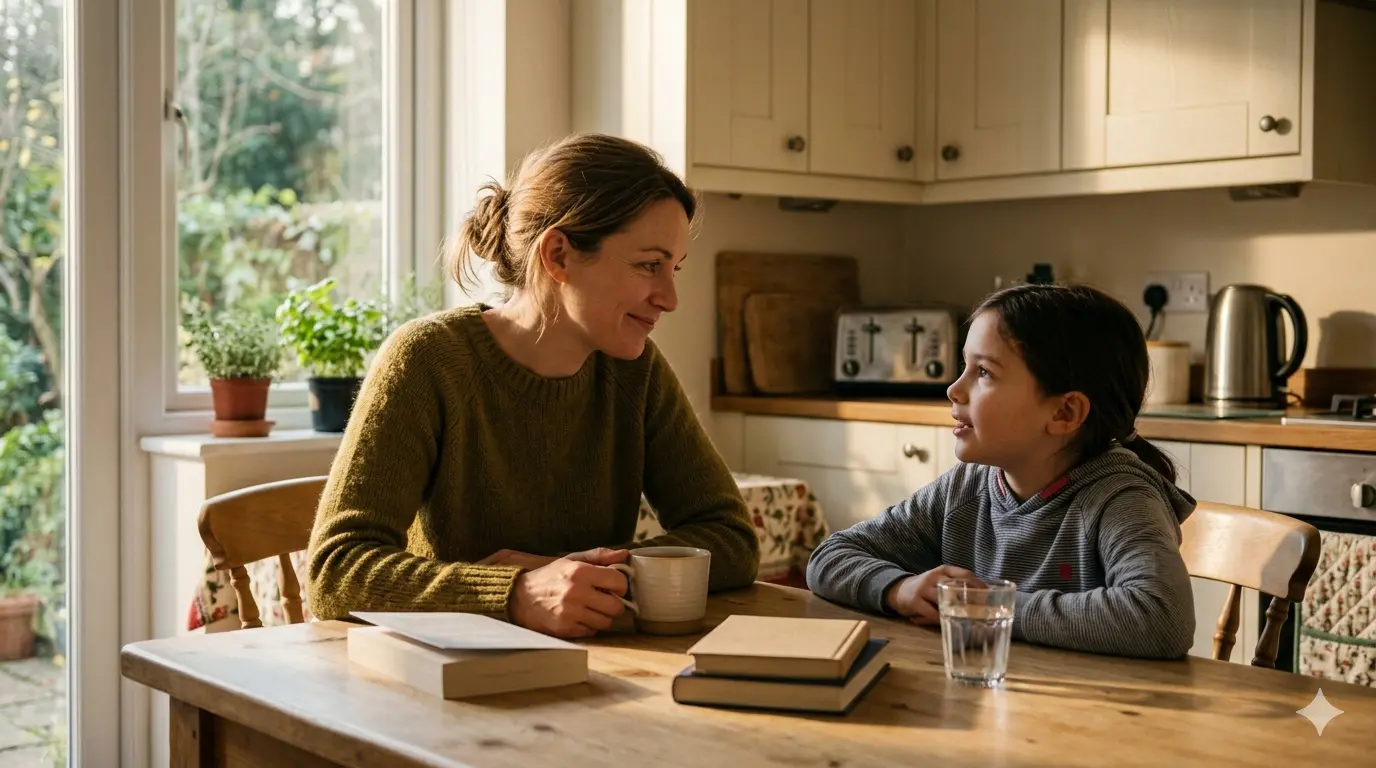
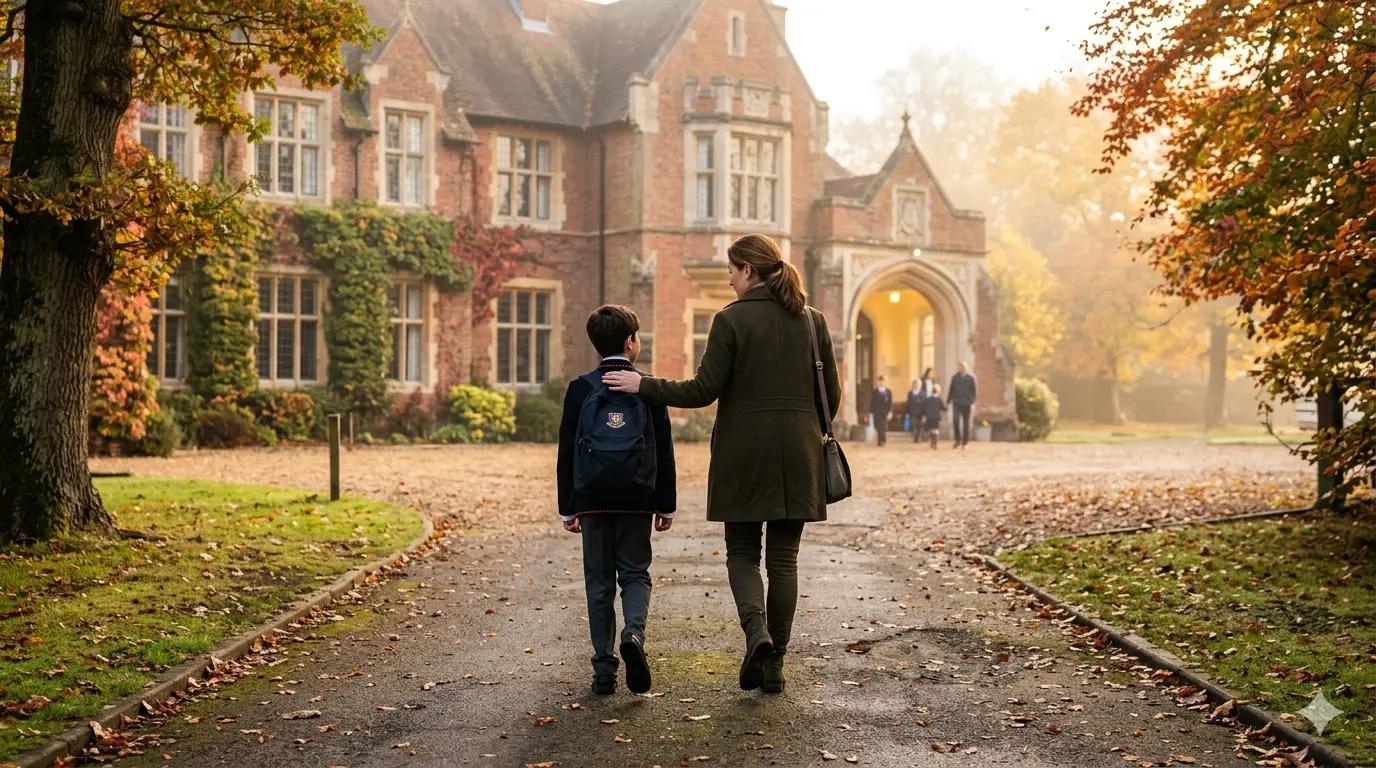
Short on time? Your child will arrive, be checked in, sit one or two timed papers in a hall with other children, and be collected afterwards. The whole thing usually takes two to three hours. Most children say it was less scary than they expected. This guide covers every step so neither of you is caught off guard.
The Week Before: Setting Up for a Smooth Morning
The exam itself is only part of the story. A calm exam day starts with a calm week leading up to it. Resist the urge to squeeze in last minute practice sessions. By this point, your child knows what they know. Extra cramming in the final days tends to increase anxiety without adding measurable benefit.
Use the week to confirm the practical details. Check the venue address carefully because some test centres are different from the school your child is applying to. Print or screenshot any confirmation emails so you can access them without relying on mobile signal. Plan your route and add at least 30 minutes of buffer time. Traffic near popular test centres can be surprisingly heavy on the morning.
What to Pack the Night Before
Get everything ready the evening before so the morning stays relaxed. Your child will need:
- Two or three sharpened HB pencils (mechanical pencils are usually not allowed)
- A good quality eraser
- A pencil sharpener
- A clear water bottle with the label removed
- The admission letter or confirmation email (printed)
- A watch with no smart features and no calculator function (analogue is safest)
Most test providers are strict about what can be brought in. Pencil cases, rulers, calculators, and phones are almost always banned from the exam room. Check your specific test centre's instructions because rules vary between GL, CEM, and school-set exams.
What Your Child Should Wear
Some test centres ask children to wear school uniform. Others say comfortable clothing is fine. Check your confirmation letter. If there is no guidance, go with comfortable, layered clothing. Exam halls can be cold or warm and your child should be able to adjust without asking permission.
The Morning Of: Breakfast and the Drive
Keep the morning as normal as possible. A familiar breakfast is better than an unusual one, even if you have read that certain foods boost concentration. If your child normally has toast and cereal, give them toast and cereal. A full stomach with familiar food settles nerves far better than an unfamiliar smoothie packed with supplements.
Avoid talking about the exam during the car journey unless your child brings it up. If they want to chat about it, keep your tone light. If they are quiet, let them be quiet. Some children listen to music. Others stare out of the window. Both are perfectly fine ways of managing pre-exam nerves.
If your child asks a last minute question about exam technique, keep your answer short. Something like "read each question carefully and move on if you get stuck" covers most situations. Long lists of reminders at this stage tend to overwhelm rather than help.
Arrival and Check-In
Aim to arrive about 20 to 25 minutes before the stated start time. Arriving too early means standing around in a crowd of anxious parents and children, which is not ideal. Arriving with just minutes to spare creates unnecessary rushing.
At the entrance, a member of staff will check your child's name against a register. They may ask to see the admission letter. Your child will then be directed into the building, usually into a waiting area or straight to their allocated seat in the exam hall.
The Goodbye
This is the moment that catches many parents off guard. The separation is usually quick and matter of fact. Staff will ask parents to say goodbye at the door. Keep it brief and warm. A simple "do your best and I will be right here when you come out" is enough. Avoid saying things like "this is really important" or "remember everything we practised" because those phrases add pressure at exactly the wrong moment.
Your child may look nervous walking in. That is completely normal. Once they sit down and the papers are in front of them, most children report that the nerves fade quickly because they are focused on the questions.
Inside the Exam Hall: What Your Child Experiences
Understanding what happens inside helps you prepare your child and helps you manage your own imagination while you wait outside.
Seating
Children are usually seated at individual desks arranged in rows. They will be told where to sit, either by name labels on desks or by an invigilator directing them. Desks are spaced so that children cannot see each other's papers.
The Papers
The invigilator will explain the rules before the exam begins. Children are told not to open the paper until instructed. They will be given the total time for the paper and told how to fill in their details on the answer sheet. For multiple choice papers (common with GL Assessment), your child will use an answer booklet where they mark their chosen answer with a pencil line.
Most 11+ exams consist of either one long paper or two shorter papers with a short break in between. A typical structure looks like this:
| Format | Papers | Duration | Break |
|---|---|---|---|
| GL Assessment (standard) | 2 papers | 45-50 minutes each | 10-15 minutes between |
| CEM style | 2 papers | 45 minutes each | Short break between |
| CSSE (Essex) | 2 papers | English 70 mins, Maths 60 mins | Break between |
During the Exam
Your child will work through the paper at their own pace. Invigilators walk quietly around the room. If a child needs the toilet, they raise their hand and are escorted out. Time announcements are typically made at the halfway point and again when five or ten minutes remain.
Children are not allowed to talk, look at other papers, or leave until the time is up. If they finish early, they are encouraged to check their answers.
The Break Between Papers
If there are two papers, the break is usually spent in the exam hall or a nearby area. Children can drink water and use the toilet. Some centres provide a small snack, but do not count on this. If your child is used to having a snack mid-morning, slip a small cereal bar into their pocket (check centre rules first).
Staff supervise during the break. Children are not allowed to discuss the paper with each other, although some inevitably whisper. Reassure your child beforehand that comparing answers during the break is not helpful and they should just rest their eyes and have some water.
What Happens After the Last Paper
When time is called on the final paper, children put down their pencils and wait while papers are collected. They are then released, usually class by class or row by row, to the exit where parents are waiting.
Your child will come out one of two ways. Some children bounce out, full of energy, wanting to tell you every detail. Others are quiet, drained, and just want to go home. Both reactions are completely normal and neither one tells you anything about how they actually performed.
What to Say When They Come Out
This matters more than you might think. Avoid asking "how did it go?" as your opening line. Your child has just spent two hours under pressure and they do not want an immediate debrief. Instead, try:
- "I'm proud of you for doing that."
- "Shall we go and get some lunch?"
- "You did it. That's the hard part done."
If they want to talk about the exam, let them lead. If they mention a question they found difficult, resist saying "oh, the answer was probably X" because you do not know the paper and you might be wrong. Simply say "it sounds like you gave it a good go" and move the conversation on.
The Post-Exam Afternoon
Plan something enjoyable for the rest of the day. Not a reward for performance, just an acknowledgement that they did something challenging and now they get to relax. A favourite meal, a trip to the park, a film on the sofa, or time with friends all work well.
Do not let them (or yourself) go online to search for answers or discuss the exam in parent forums. The papers are confidential and the fragments people share online are unreliable. You will not get useful information from these discussions and they will only fuel anxiety.
Common Worries and Honest Answers
| Worry | What Actually Happens |
|---|---|
| "What if my child needs the toilet?" | They raise their hand and are escorted out. The clock does not stop, so practise finishing water early and using the toilet before the exam starts. |
| "What if they run out of time?" | Most children do not finish every question. The papers are designed to stretch the most able. Missing a few questions at the end is completely standard. |
| "What if they feel sick or panicky?" | Invigilators are trained to handle this. Your child can raise their hand. In rare cases, children are moved to a smaller room to continue. |
| "What if they fill in the answer sheet wrong?" | The invigilator explains the answer sheet clearly before the exam. Practise with a sample answer sheet at home so the format is familiar. |
| "What if they cry?" | It happens occasionally and staff handle it with kindness. It does not mean the exam is ruined. Many children recover quickly once they settle into the questions. |
A Timeline for the Day
Here is a rough guide to how the day typically flows. Exact times depend on your test centre.
| Time | What Happens |
|---|---|
| 7:00 AM | Wake up, normal breakfast, get dressed |
| 8:00 AM | Leave home (adjust for your journey time) |
| 8:30 AM | Arrive at test centre, find parking or drop-off point |
| 8:45 AM | Check-in begins, say goodbye at the door |
| 9:00 AM | Paper 1 begins |
| 9:50 AM | Paper 1 ends, short break |
| 10:05 AM | Paper 2 begins |
| 10:55 AM | Paper 2 ends, papers collected |
| 11:00-11:15 AM | Children released to parents |
What You Do While You Wait
This is the part nobody prepares you for. Once your child walks through those doors, you are left standing in a car park or a nearby cafe with nothing to do but think.
Some parents sit in their car. Others find a coffee shop. A few walk laps around the block. Whatever you do, try not to spend the entire time on your phone refreshing 11+ forums. It will not help your nerves.
Bring a book, a podcast, or a friend. If you are with other parents, try to steer conversation away from "how much practice has your child done" because that conversation benefits nobody.
If Your Child Has Access Arrangements
If your child has been granted extra time or other access arrangements (for example, a reader, a scribe, or a separate room), the centre will have confirmed this in advance. Arrive a few minutes earlier so staff can direct your child to the right room. Make sure your child knows what to expect so they are not surprised by different seating or a smaller group.
After Exam Day: What Comes Next
Results typically arrive between four and eight weeks after the exam, depending on your region and test provider. For most GL areas, results come out in mid-October. For CEM areas, it can vary by school.
Between exam day and results day, try to return to normal family life. Your child does not need daily reminders that results are coming. They already know. Keep routines steady, keep the mood light, and let them be a ten year old for a while.
Not sure which exam format your child will face? → The 11+ Entrance Exam: What It Really Is
Worried about your own nerves on the day? → Managing Your Own Anxiety
Explore our exam day checklist to make sure you have everything covered.